
More than 45 years after the first IVF birth, we’ve moved from pioneering experiments to a fast-moving era defined by smarter tools, stronger data, and deeply personalized care. Today, fertility innovation extends far beyond simply improving IVF success rates.
The future of reproductive technology is being shaped by tools that allow us to see, measure, and understand fertility in ways that were unimaginable just a generation ago. With earlier diagnostics, more powerful biological tools, smarter automation, and long-standing gaps (especially in male fertility and ovarian health) now being addressed – fueled by AI, computational biology, and advanced imaging – we’re beginning to see eggs, sperm, the uterine environment, and the entire fertility journey with a level of clarity that simply didn’t exist before.
These breakthroughs are ushering in a new era of more personalized, predictable, and effective care, and were recently recognized by a global infertility community. On December 1, at The Times Center in New York City, the first-ever World Fertility Awards (WFAs) brought together experts and advocates from every continent who are dedicated to supporting people on their family-building journeys. The WFAs celebrated both early day pioneers from the beginning of IVF and vitrification, and present day innovators changing the field as we know it.
Today’s momentum builds on the early scientific leaps that transformed the field. Two trailblazers who spoke on stage at the WFAs underscored this progress: Jacques Cohen, whose early innovations in ICSI and sperm biology reshaped the trajectory of reproductive science; and Elizabeth Jordan Carr, the first baby born through IVF in the United States, who reminded the audience that her own birth came after “more than 40 attempts.” Their stories reflect not only how far we’ve come—but how much further innovation can take us.
One of the standout moments of the show was our spotlight on the innovations shaping the future of fertility. This year’s honorees each tackle a different pressure point in the system. From hundreds of nominations, we selected five leading innovations, who were celebrated live on stage for their work that is paving the way for the next generation of patients, providers, and possibilities. Here are the innovations that were Future of Fertility honorees at the 2025 World Fertility Awards:
Conceivable Life Sciences (Mexico & United States)
Future Fertility (Canada)
Gameto (United States & Spain)
STAR – Sperm Tracking and Recovery (United States)
Uterine Transplant – Ozkan Technique (Turkey & United States)
Conceivable Life Sciences: Transforming Embryology As We Know It
Conceivable Life Sciences is transforming fertility access through its next-generation, tech-enabled clinic model, combining advanced lab automation, streamlined protocols, and patient-centric design to make high-quality care more scalable and attainable.
By combining robotics, advanced imaging, and intelligent decision-support tools, AURA – Conceivable Life Sciences’ AI-powered, fully automated in vitro fertilization (IVF) lab platform – replaces many of the most variable, manual steps in the embryology workflow with precise, repeatable automation.
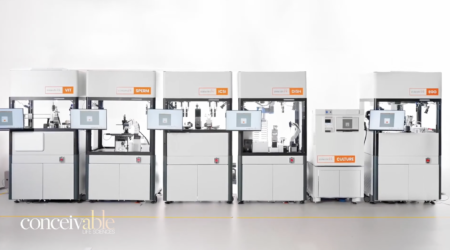
This can allow embryologists to work with greater consistency, accuracy, and efficiency—ultimately reducing human error, increasing standardization, and expanding access to high-quality care. In short, AURA is transforming the embryology lab from an artisanal process into a scalable, data-driven system poised to shape the next era of reproductive medicine. Alejandro Chavez-Badiola MD, PhD, Co-founder and Chief Medical Officer from Conceivable Life Sciences shares:
“AURA doesn’t eliminate human expertise—it multiplies its reach. Every AURA system operates with one senior embryologist and two technicians supervising operations. The difference is what they’re spending their time on. Automation handles the repetitive, high-precision tasks: pipetting with sub-micron accuracy, maintaining perfect environmental conditions, executing ICSI with more than 200 automated steps to combine sperm and egg to create an embryo. Automation allows embryologists to deliver expert-level consistency from day one while focusing their expertise where it matters most: clinical judgment, troubleshooting complex cases, and patient care strategy. The goal isn’t fewer embryologists. It’s better embryology. The difference between a breakthrough and a disruption is whether the field embraces change or resists it. We’re building for the embryologists and clinics who see automation as an opportunity to help more people have children.
The World Health Organization reports that infertility affects 18% of the global reproductive-age population, yet 95% lack access to IVF. The current model can’t solve that gap because it requires top-tier expertise physically present at every location—and there simply aren’t enough highly trained embryologists to meet global demand. Automation allows embryologists to deliver expert-level consistency from day one while focusing their expertise where it matters most: clinical judgment, troubleshooting complex cases, and patient care strategy. The goal isn’t fewer embryologists. It’s better embryology.
AURA changes that equation through two mechanisms: remote operation and economic viability. Our remote ICSI study—where Dr. Jacques Cohen performed ICSI from New York while the cells were in Guadalajara—proved that senior embryologists can oversee single or multiple systems across geographies. While it would be amazing to have a Jacques Cohen in every clinic, obviously that’s impossible. But now with our remote systems, it is possible to have the very best embryologists supervising distributed operations who can intervene remotely when needed.
On economics, Activity-Based Costing research showed potential cost reduction from $7,000 to $2,275 per baby through standardization and efficiency gains. In addition, by improving outcomes (less cycles), cost per baby can be reduced significantly. That’s the kind of cost structure that enables expansion into underserved markets. But technology alone isn’t enough. We need engagement that enables rather than restricts innovation—systems that evaluate automation based on clinical outcomes. We need business models that reward consistent results rather than just procedure volume as the field shifts to understanding automation as a viable path to democratizing access. The alternative is accepting that IVF remains concierge medicine for the few who can afford it. We don’t accept that future and believe IVF should be a population health solution for the millions who dream of parenthood.”
Future Fertility: Pioneering AI-Powered Egg Assessment
What if the future of fertility isn’t just about improved outcomes, but more information, better informed decisions, and more transparency for both clinicians and patients?
Patients have been told for years that understanding our eggs just isn’t possible. One company – Future Fertility – refuses to accept that, and is finally giving us the insight we deserve.
Future Fertility, a Toronto-based company, is pioneering AI-powered egg assessment, offering clearer, more personalized understanding of oocyte (egg) quality to support more informed decision-making and improved fertility outcomes both patients and providers alike.
Their flagship innovation VIOLET uses advanced AI to assess the quality of individual oocytes from a single 2D image, giving clinicians data-driven insights that can support embryo selection, patient counseling, and overall treatment planning. Their second tool, MAGENTA, provides a non-invasive AI assessment of oocyte maturation in IVF cycles—helping embryologists and patients alike better understand which eggs are most likely to develop successfully.

Together, VIOLET and MAGENTA are helping shift fertility care toward a future where patients and providers have clearer information, more confidence, and more personalized treatment pathways.
Christy Prada, CEO of Future Fertility, shares:
“To date in the field, the only thing we haven’t been able to measure is the oocyte. All we’ve ever been able to do is understand how many eggs were retrieved and likelihood of success is based on age based estimates, which isn’t personalized and doesn’t factor in differences that exist patient to patient. This is especially important because the oocyte is the main driver of embryo quality…and yet we’ve had very little understanding of what makes one egg have more reproductive potential than another. That was the premise of what we set out to solve.
One of our Co-Founders, Dr. Dan Nayot, saw the impact of this gap every day in his fertility practice. After egg retrieval—a physically, emotionally, and financially intensive process—the first thing his patients would ask is, ‘How did my eggs look?’ and it was frustrating to not have an answer beyond age-based estimates of success. Patients don’t leave the process feeling reassured or clear on what that means for them. It’s a huge gap in both the patient experience and the clinical experience.
We’ve built, trained and validated our AI model on over 650k oocyte images paired with reproductive outcomes. We’ve validated that we can take an image of an egg and predict whether it’s more or less likely to become a blastocyst. Our scores correlate with blast development, blast quality, and even euploidy status. We’ve published six manuscripts validating the technology and have presented more than 65 abstracts with partner clinics at conferences around the world. We’ve shown that it works across different populations, different image sources, and different clinical use cases.
There are a few ways to think about AI. It can make things better, faster, cheaper, or it can do something humans simply can’t do. What we’re doing falls into the second category. For years, scientists have tried to look under a microscope and distinguish a good egg from a bad egg, and it just hasn’t been possible. AI can now fill that gap. For years, scientists have tried to look under a microscope and distinguish a good egg from a bad egg, and it just hasn’t been possible. AI can now fill that gap.
Sitting on top of the AI models, we have products that address different clinical use cases. VIOLET is for egg freezing. Patients at that stage want to know whether they have enough eggs to create enough embryos to ultimately have a baby…Without objective data, it can be difficult for a patient to do, or not to do, another round, especially if they seem to have a ‘good’ number of eggs on paper. VIOLET helps ground those conversations in data, not assumptions.
MAGENTA is our report for IVF patients. Those patients will know by day 5 or 6 whether they’ve developed blasts. What’s more useful is understanding the quality score for each egg—so if there’s a failed cycle, you can assess whether it was related to egg quality, sperm, or something else. Our clinic partners tell us their patients find the information to be helpful, and they appreciate seeing pictures of their own eggs—it gives them a sense of connection to the process.”
Gameto: Rethinking Biology, Maturing Eggs Outside the Body
What if parts of the fertility process could happen outside the body – safely, gently, and with fewer medications?
For decades, it sounded like science fiction. Today, companies like Gameto are turning that question into real scientific progress. Using advanced cell-engineering technology, Gameto is reimagining how eggs mature. Gameto aims to reduce the burden of ovarian stimulation and pave the way for safer, more efficient fertility treatments.
Gameto’s lead technology, Fertilo, represents a major shift in how eggs are matured for IVF and egg freezing. Today, patients typically endure high-dose hormone injections for nearly two weeks to facilitate eggs to mature inside the body. Fertilo takes a different approach. By using engineered ovarian support cells – created from stem cells – to mimic the ovary’s natural environment in a dish, it allows immature eggs to mature outside the body with far less medication.
Elsa Feigenbaum, Chief of Staff at Gameto, shares with us:
“Current fertility treatments are hard on women physically, professionally, and financially. In typical IVF, women are subject to two weeks of hormonal injections, which can cause complications, side effects, and ovarian hyperstimulation. IVF is expensive. The average woman goes through three or more cycles to have a baby. With nearly half of the women in the US never reaching their maternity goals, there is a large unmet need for innovative products that prioritize women.
Fertilo is designed to make IVF and egg freezing faster, safer, easier, and more accessible. It uses engineered, young ovarian support cells that mature eggs in a dish by replicating the natural maturation process outside the body. This shortens the IVF and egg freezing hormonal injections from 2 weeks to 3 days and reduces the number of hormones required by 80%.
Fertility care has traditionally asked people to work harder against their biology, more injections and higher hormone doses, especially as the ovary ages. Scientifically, most fertility treatments focus on amplifying ovarian signaling to force many eggs to mature at once. But in age-related fertility decline, the ovary is already depleted and less responsive. Fertilo addresses this limitation by supplementing the process with a ‘young ovary in a dish,’ providing the supportive signals that eggs need to mature without overburdening the patient’s own ovary. Instead of trying to push an aging or medically stressed ovary to do more, we change the environment around the egg itself.

This approach also opens doors for people who have historically had fewer or no options. For patients with PCOS or a high risk of ovarian hyperstimulation, Fertilo may offer a safer path. For cancer patients who don’t have time for weeks of stimulation before treatment, it creates the possibility of preserving fertility when it was previously impossible or extremely challenging. For patients with PCOS or a high risk of ovarian hyperstimulation, Fertilo may offer a safer path. For cancer patients who don’t have time for weeks of stimulation before treatment, it creates the possibility of preserving fertility when it was previously impossible or extremely challenging.
Ultimately, Gameto is expanding what’s possible, so fertility care can adapt to people’s lives and biology, not the other way around. We hope this will create the opportunity for all women to take more ownership of their fertility journey, no matter what stage of life they are in.”
STAR: Sperm Tracking and Recovery, and an Overdue Look at Men’s Fertility
What if the difference between “no sperm” and “one sperm” was simply the limit of human eyesight?
For decades, male-factor infertility often stopped at what a lab technician could see under a microscope. STAR is changing that story. By using artificial intelligence and advanced engineering to detect sperm that were previously invisible to the human eye, this technology is transforming what’s possible for people told they had no options.
STAR, developed at Columbia University, is advancing male-factor fertility diagnostics with precise sperm-tracking and recovery technology that helps identify viable sperm in complex cases, offering new pathways toward successful fertilization. For decades, male-factor infertility often stopped at what a lab technician could see under a microscope. STAR is changing that story. By using artificial intelligence and advanced engineering to detect sperm that were previously invisible to the human eye, this technology is transforming what’s possible for people told they had no options.
Zev Williams, Director, Columbia University Fertility Center, explains:
“For too long, infertility has been framed primarily as a women’s health issue, even though male factors contribute in roughly half of cases. As a result, sperm biology and male fertility innovation received far less scientific attention and investment. There was also an implicit assumption that if no sperm were seen under a microscope, there was simply nothing more to be done. But in male infertility, the difference between zero sperm and one sperm is profound. It is the difference between biological parenthood and not. When sperm exist at extremely low levels, they can be effectively invisible to the human eye using traditional methods.
What STAR signals is a shift in both mindset and capability. By applying artificial intelligence, microfluidics, and engineering to reproductive medicine, we can now search and recover sperm far more thoroughly and precisely than a human ever could. At Columbia, STAR allows us to detect and isolate sperm that were previously beyond the limits of human detection. That changes the conversation from one of finality to one of possibility and reflects a broader reawakening of innovation in male reproductive science.

What has surprised me most is not just the clinical success, but the emotional impact of what this technology represents. STAR uses artificial intelligence to see things that are beyond human perception and to isolate living cells with a speed and delicacy that humans simply cannot achieve on their own. For patients who were told there were no sperm and no options, the shift from invisible to visible can be profound. Clinically, it has been remarkable to identify sperm in samples that were repeatedly labeled ‘zero’ by conventional methods. Emotionally, what stands out are the moments when patients realize that the limitation was never their biology alone, but the limits of the tools we had available at the time. That realization can change how people see their past, their diagnosis, and their future. What has surprised me most is not just the clinical success, but the emotional impact of what this technology represents. STAR uses artificial intelligence to see things that are beyond human perception and to isolate living cells with a speed and delicacy that humans simply cannot achieve on their own. For patients who were told there were no sperm and no options, the shift from invisible to visible can be profound.
I hope STAR helps normalize male fertility evaluation as proactive, sophisticated, and essential, not as a last stop after everything else has failed. Male fertility should be discussed with the same nuance and scientific curiosity that we bring to ovarian reserve, egg quality, or uterine health. More broadly, I hope it moves the conversation away from blame and toward biology. Infertility is not a personal failure. It is a medical condition, and like many medical conditions, it benefits from better tools and better science. Ultimately, technologies like STAR reinforce the idea that fertility is a shared responsibility and a shared opportunity for innovation. When we invest equally in understanding both sides of reproduction, patients do better and so does the field.
A diagnosis does not equal destiny. In fertility, the limits of what is possible are often defined by the limits of the tools being used. As technology advances, so do patients’ options, sometimes in ways that would have been unimaginable even a few years ago. I wish people understood how much progress is happening quietly, behind the scenes, driven by collaboration between medicine, engineering, and data science. STAR is one example of that progress, but it represents a larger movement toward precision, personalization, and hope in reproductive care.
Fertility can feel deeply isolating, but patients are not alone, and the science is advancing rapidly. At Columbia, we are already seeing that many people who were once told they could not have a successful pregnancy now have real options. That progress is something to celebrate.”
Enhanced Uterine Transplant Success, Thanks to the Özkan Technique
Worldwide, uterine transplantation has rapidly shifted from experimental surgery to a groundbreaking option for people who have previously been told they could never conceive. Since the first successful birth from a transplanted uterus in 2014, more than 130 uterine transplants have been performed across global centers, resulting in over 60 healthy babies. As programs in the U.S., Europe, and beyond continue to refine the procedure, 2026 marks a moment when this once-unimaginable pathway to pregnancy is becoming increasingly viable, carefully studied, and more widely accessible.
And while many innovators are focused on predicting fertility outcomes earlier or reengineering reproductive biology, others are turning their attention to parts of the system that have long been overlooked. Among them is Dr. Ömer Özkan and his team in Turkey, who have made waves with their dedicated focus on one of the least-understood organs in reproductive medicine: the uterus.
The Özkan team pioneered the first ever successful uterine transplantation from a deceased donor in 2011. Located at Akdeniz University in Antalya, Turkey, Özkan’s team was among the first to demonstrate that transplantation of a uterus from a deceased donor could be technically feasible and could lead to eventual pregnancy and birth, expanding options beyond living donors.
Why was this so groundbreaking?
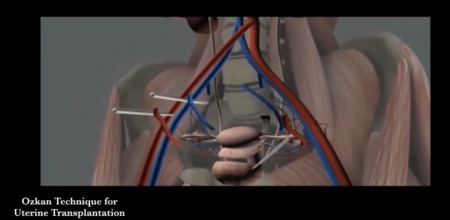
In addition to pioneering the use of a deceased donor for uterine transplantation, the team’s surgical breakthroughs reshaped what was thought possible in vascular management. In cases where blood flow to the graft was compromised (such as what they call venous ‘congestion’), the surgeons introduced innovative vascular augmentation techniques. This meant adding a vein from the leg to connect important blood vessels, helping improve blood flow to areas that weren’t getting enough – something they could see on scans before the embryo transfer.
The impact is astounding – on the pregnantish podcast we spoke with Jennifer, the third woman in the world, and the second in the US, to deliver a baby from a uterus that was donated to her from a deceased donor. Jennifer joined us on the pregnantish podcast, representing the first woman to speak about her transplant publicly.
The Özkan team’s ability to troubleshoot and re-engineer the graft’s blood supply set a new surgical standard for the field and expanded the viability of uterine transplantation overall. Now coined the “Özkan Technique,” the team’s surgical innovation encompasses both the original successful surgery and the subsequent modifications and procedural learnings that have informed how uterus transplantation can be performed more reliably and safely in clinical practice.
A Future Built on Innovation and Humanity
Even with the incredible technology that is powering the future and scaling this work, we can’t undermine that this is a deeply human process. These technologies also allow us to become more personalized, instead of pursuing a one-size-fits-all approach to care.
As Relationship author, Fertility Advocate, and Founder of the World Fertility Awards, Andrea Syrtash, reminds us, fertility care is deeply vulnerable work. Scaling innovation must go hand-in-hand with empathy, support, and a recognition that each person’s path to parenthood is different:
“The future of fertility is bright, with innovators and technological breakthroughs that are undoubtedly paving the way to drive more access and improved outcomes. Technology and AI now make it possible to scale care in ways that were unthinkable even a few years ago. At the same time, we have to remember that undergoing fertility treatments is deeply vulnerable and nuanced, and not everything can be automated away. My hope is that the future of fertility care allows us to help more people and personalize treatment while finding more ways to support people on their journeys to parenthood.”
If there’s one thing these breakthroughs make clear, it’s that the future of fertility won’t be defined by a single invention or a single discipline. It will be shaped by many innovators working in parallel – solving different problems, filling historic gaps, and giving people clearer information, more options, more hope and more access to treatment than ever before. From AI that finally helps us understand egg and sperm potential, to lab automation that is able to serve more patients, to life-changing transplants that rewrite what’s possible for people once told they could never carry a pregnancy, the next era of reproductive medicine is more precise, more proactive, and less defined by “wait and see.” The breakthroughs highlighted here are just the beginning. The future of fertility is bright, and together, we’re building it.